User Engagement: How is your New Product Team Designing for it?
User engagement matters. It’s the reason people come back to an application. It promotes familiarity and loyalty with a brand and product. It enhances visibility, as people share content. It’s a sign of validation, telling you that the product you produce or the way you promote it is useful.
As a products iterate, its user engagement will probably be the most important predictor of future success. This is because engaged users are the ones most committed to your product. You can count on them to try out those cool new features. All fo this, and to drive referrals, provide feedback, and evangelize your product.
Of course, quantifying user engagement is easier said than done. Even though we can all agree that user engagement is a crucial component to the success of a business, often even relatively simple ways to optimize engagement are overlooked.
First: Defining “user engagement” for your specific product
Let’s start by pointing out that “engagement” is a loose term, and means different things depending on your product. For a publication, user engagement can be measured by the number of impressions. This is based on clicks, shares, likes, and other social metrics.
Whereas for an app it can be monthly active users or daily active users weighted against attrition. Investors will often ask what your KPIs are, these are often synonymous with your engagement metrics.
When defining engagement, the first step will be determining what engagement means for your specific product before you can lay out a strategy.
How to define engagement: define the value proposition
In today’s marketplace, there are hundreds if not thousands of competitors to your product – so the question is: what makes you stand out from the rest of them? What value do you give users that all the other guys out there don’t?
Define engagement activities and track, score, and rank them.
Next, you should define engagement activities (i.e., upvote news article, buy a content pack, watch a video, comment on a photo, and the like) to start tracking them. These activities represent the extent to which your users who engage with your product.
There are several analytical tools (for mobile apps you can use Appsee, for example) that allow you to track user behavior easily. It’s helpful to score those activities based on importance (i.e., clicking on an article is less valuable than sharing it to social feeds). Once you have each activity scored, you can rank them. Ranking will help you better understand how your users engage with your site/product while elucidating areas of improvement.
Is Management Letting Your Digital Products Mature?
I can’t tell you how often this happens. A client wants to contract us out for a project, they’re building a new strategic initiative to support a business unit, or roll out a new revenue generating product – the objective of our work is to define a strategic path forward, propose a handful of products approaches we believe will be successful, do some early validation and build the thing, then support it with some minor bug fixes.
Sounds good on paper, fits well within budget allocations and creates a tangible endpoint. The issue however is – it misses the one overarching element of digital products. They’re never complete.
Digital products by their nature are living things that need continuous updating. Their nature lends themselves to kaizen, and in turn kaizen, is at the center of all digital products. The expectations among much of management are different. If we build it, it’s then up to marketing.
Sadly, this belief still permeates management mindsets. Here’s an example.
A while back we were working with a client who had us build them a subscription product. Standard consumer facing marketplace SaaS model. Initial validation proved the product was sticky within certain US populations, but its growth was limited.
To us this meant the product had legs, people were using it, and paying for it. What it lacked was a reworked customer experience, augmented messaging, and some usability fixes that came to light after the fact.
We devised a 12-month rollout strategy for the product, presented it to the product owner, and got greenlit to send it up to management.
Two weeks later, management kills the project. That same year (2016) a competing product hit the market, today is generates ~4MM in MRR last I checked.
Digital product management requires constant work.
The day a product launches is the day its born, it needs to grow before it can reach maturity. This involves constant work, taking data, using it to make decisions, testing hypothesis, and maintaining project resources to make updates, changes, improvements. Most startups know this. But when speaking with traditional corporate, there is all too often a misalignment in ethos.
Any product will at minimum require a product team that can work on it for a 12 month stretch post launch. Making updates and proving hypothesis. Notwithstanding, the digital product will need marketing support, and marketing’s strategy, will need integration into the product strategy. They coincide and work hand in hand.
So often you’ll see a product that launches, but the customer experience just isn’t there, or the messaging is off between marketing and product, restricting the enterprises ability to bring the product to market well, and inevitably leading to its demise. To avert these types of scenarios management needs to adequate budget for each product lifecycle.
What we’re specifically speaking to are the following: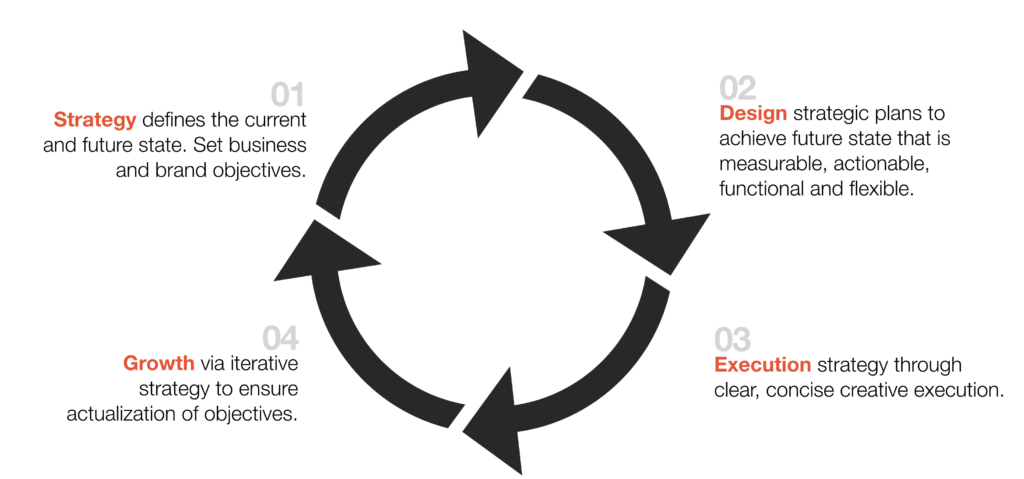
Strategy
This is where the consulting company works with management, conducts its own market research, defines current and future states.
Design
Together strategic plans are laid out to achieve the future state that is measurable actional functional and flexible. Product is defined, customer experiences are mapped out, the technology architecture is selected.
Execution
The product is built, customer experience is implement, and data, tracking, analytics and marketing tools are implemented to test against predefined KPIs.
Grow
A dedicated product team is assigned to the project for ~12 months, working alongside marketing to grow the product in a controlled fashion all the meanwhile optimizing product market alignment.
Usually, clients will have budgeted for Design and Execution, but forego the Strategy and Grow pieces which are in my opinion the cornerstones of any digital product and make up the difference between good and great.
If you’d like to get content like this in your inbox sign up to SWARM’s Newsletter.
Customer Experience Design is Gaining Headway in Corporate Circles, But What Does it Mean, and How to Think About it.
Customer experience design (CXD) In layman’s terms is how you design the systems that govern your customer’s touch points with your brand and organization. However, that’s an oversimplification. Customer experience is an enablement mechanism that supports the user experience and in turn provides feedback for it.
It is not a stand-alone piece to be added to digital applications, websites, or customer service add-on—but an integral part of the experience as a whole.
In contemporary product development the customer needs to be at its center, this human centered design approach ensures that the customer is top of mind throughout all product interactions and in turn his experience with it, should be a positive one.
It’s a part of the end-to-end brand experience, that follows the many pathways of your customer journey starting with discovery, to first use, reengagement, and any other tools that may be used to make sure the customer’s experience with a product is first class.
Ok so CX is how a brand interacts with their customer, and it’s goal is to ensure a positive experience.
Correct, and this experience is composed of distinct elements that need to be designed for individually, they are user experience design, user interaction design in digital, user feedback mechanisms, engagement mechanics, customer service design.
Each requiring individual design, and full integration with the rest.
A Customer Experience Design Anecdote
A customer goes to a website because they received the wrong order. They want to find a way to easily identify where to contact support, then contact them to air their grievance.
Imagine you go the site of the company who sold you the wrong thing. You don’t see support on the main page any where, you click about, and there’s nothing there. You then decide to log in and go to order, to see nothing there as well. Lastly, you decide to check the settings screen. We’ve all been there trying to find something that should have been easy to find.
You then call the number in the setting section and the company puts you on hold. You answer a few questions, they put you on hold again. Then, the next person asks for those same questions. How do you usually feel now?
Now imagine, you instead went to the website, clicked on support at the bottom, answered a few quick questions and got someone to chat with you right away, who credited you an additional couple of bucks for the mistake.
Each of these is a customer experience, yet they drastically differ. One is unintegrated, time consuming and leaves a bad taste in your mouth, the other integrated, and puts you first, we get that. In the next post we’ll look at the touch points that comprised these experiences.
For all things digital (including customer experience design), check out our thoughts here.
Is Your Competitive Intelligence Working for You?
CI? Yes, competitive intelligence.
In today’s rapidly changing marketplace it is pivotal that any new start up keep an eye on the competition. What are they doing that we’re not? What’s their comparative value proposition? Who is their target customer, and who is ours? These, along with other questions, are what you should be asking yourself and keeping in the back of your head. Through this method, apply your answers to the core of your competitive strategy.
Having a great idea and bringing it to market is not enough these days. Unless you’re a first mover in a completely new market, chances are you will have competition. And chances are that competition will be as well prepared—if not better—than you.
So how do you protect your business and track what their developments as compared to your own efforts?
The good news is, that you’re probably already taking some of the more important steps in competitive intelligence gathering by simply reading industry news and following your competitors blog/twitter/facebooks etc… and subscribing to the relevant rss feeds. If not, then it’s definitely time to start. No better tool exists to build basic competitive intelligence for digital markets knowledge than to focus on the public information that is already out there.
But why would you want to involve yourself in basic CI gathering? And what can a young company get from actively disseminating the data that comes from competitive intelligence for digital markets?
Analyzing Your Competitive Intelligence For Digital Markets
The first, and most important benefit of CI, is that it allows you to become more agile than your competition. Company agility is the ability to deploy rapid changes to your business model, and should a competitor with more resources enter the same space as you, having this CI will allow you to act by changing your value proposition, sales model or anything that will allow your startup to regain that competitive advantage.
However aside from agility, CI allows your startup to define certain market spaces which can allow you to establish a presence before your competitors, this along with Scenario Analysis can provide you with the tools to make the necessary decisions that can ensure a higher success rate in the face of stringent competition.
CI will undoubtedly also aid you in identifying root problems within your own startup, and is a great tool to compare your own organization to those within the same market space. However, it’s important not to get caught up in becoming overly-analytical of one’s own practices. Instead, use CI as a gauge of your activities to those of others.
Start there and you should be good to go regarding non-formal CI. As a startup, its important to remember that resources are scarce. They should create the most value to your organization, but basic CI gathering should be engrained in running your business.
If you want to know more on competitive intelligence and how to apply it to your business, be sure to check out our resource page which we’ve updated with additional books to add to your entrepreneurial reading list/library.
VP’s of Digital Need to Start Embracing Machine Learning
Why Vice Presidents of Digital Product Need to Start Embracing Machine Learning Today
It used to be that you had to program a computer to do certain things. Since the late 1990’s, there’s been a number of advances in digitization and cheap computing power. Because of these, scientists can now feed computers large amounts of data and enable them to learn from experience.
From Amazon’s product recommendations and Facebook’s ability to spot faces to Google’s self-driving car, more and more companies are turning to machine learning to improve and streamline their processes or create better ones.
Don’t get the wrong idea: machine learning isn’t just for billion dollars companies like Google or Amazon or fun projects like developing an algorithm that can master Go and win against the world’s champion. Vice Presidents of Product at Fortune 500 companies can (and should) implement machine learning into their digital products too.
Here’s why and how to do it.
The Difference between Machine Learning and Artificial Intelligence
One common misconception people have about machine learning and artificial intelligence is thinking that the two concepts are interchangeable. The truth of the matter is that machine learning is just one aspect of the broader notion of artificial intelligence.
Artificial intelligence refers to the simulation of human intelligence by machines. Sure, your phone can understand voice commands and a computer can beat the world chess champion, but we still have a long way to go until we create a real AI.
Machine learning, on the other hand, is a form of AI where a computer analyzes bits of data to teach itself how to perform a task. Google didn’t program its car to drive. It learned by driving millions of miles and observing the vehicles around it. Similarly, it didn’t program its algorithm to play Go; it fed it decades of publicly available Go games, and the computer learned the rules and strategies by studying the data.
Machine learning has been at the center of numerous breakthroughs, which is why savvy companies are introducing it to their business operating models.
Why Should VPs of Product Design Be Embracing Machine Learning?
If handled properly, machine learning could bring huge benefits to your department and the business as a whole. Not only that it will allow your company to keep pace with the ever-changing business environment, but it can also provide you with valuable insights and enable you to act at the right moment and take advantage of various opportunities.
● It Will Lead to Better Product Design
The design of digital products often includes developing interactive interfaces that allow users to make choices. For example, you can establish what movie recommendations you get on Netflix by expressing your preferences. Or, in Twitter’s case, the social media platform will constrain your timeline so that it shows update only from the people you follow.
Machine learning could change all that. An ML algorithm could predict what a user wants to see and eliminate the need for a complex interface. Since users will no longer have to spend a lot of time scrolling through content, the experience they have on your platform will improve significantly.
● It Provides an Insightful Understanding of Your Customers
Knowing your customers, understanding what drives them and the triggers that convince them to choose a company over another are the overarching rules of exceptional product design. Competent VPs know their customers as well as they know their own families.
But, getting there, and creating a customer-first mentality that is ingrained into your department is no easy task. It takes a lot of time and hard work to research everything you possibly can about them, from their goals and dreams to what makes them tick.
That’s where machine learning could come in handy.
● Machine Learning Excels at Collecting and Analyzing Data
Here’s an example: you’ve designed a new fitness bracelet and leaked a video of how it looks and works. A machine learning algorithm can monitor social media chatter, examine your target audience’s response to the product, and provide possible solutions. That way, you can tweak the product to resonate with what your customers want.
Here’s another example: You’re about to update your gaming platform and the new version won’t include a feature you deemed as unimportant. But, when users learned about the change, they took to social media to voice their complaints. Using machine learning, you were able to monitor conversations and understand what your customers expect from the update. Based on the data collected, you tweaked your gaming platforms and turned complainers into brand advocates.
● Automating Processes & Boosting Efficiency
Imagine that you are standing in line at the supermarket. You have a million different things that you need to take care of, but you can’t do any of them without buying this important item. So, you’re forced to sit in line for minutes on end when you could be using your time more efficiently. To make matters worse, the cashier’s machine breaks down.
It may sound like a nightmare, but that is a scenario VPs of Product face on a regular basis. Slow and inefficient processes are making it difficult to develop outstanding products and deliver them on time.
With machine learning, you can eliminate repetitive tasks, increase the speed and efficiency of essential processes and reduce them to just a few clicks.
● Predictive Maintenance
Machine learning makes it possible to detect anomalies in the system and address them before they affect the entire design process. Instead of having to wait for hours to fix the problem, ML can anticipate breakdown and streamline maintenance.
What Does It Take to Get Started?
VPs of Digital Products can exploit the benefits of machine learning but only if they have a strategic plan in place. Without a long-term game plan, machine learning risks becoming just another tool in your department’s arsenal. Sure, it will probably help you streamline the product design process, but its capabilities will be limited to cookie cutter applications.
VPs planning to embark on the machine learning train must accomplish three crucial tasks first:
● Analyze all possible ML solutions
● Develop a long-term strategy
● Acquire the necessary expertise to ensure proper implementation
With a data scientist on your team, for example, you can develop a strategic vision that takes into account not only the need for collecting and analyzing data, but also the gaps in your inputs and the resources you’ll need to address them.
What’s the Role of VPs?
Machine learning will undoubtedly change how your department operates and will require drastic behavioral changes. Your role as VP of Product is to encourage and enable the change.
Don’t expect that to happen overnight, though. Acquiring the necessary skills and adjusting to the new requirements will take time. Make sure you provide your team with the right tools to make the change swift and smooth.
What’s Next?
Understanding how machine learning works or why it provided you with a certain solution can be tricky. It’s like trying to understand why you choose to see that tearjerker movie or an action flick, or choose a Thai restaurant over a Chinese one. Sure, you may provide a rationale for your actions (a friend recommended the movie, or you wanted to try something new,) but the reality is that in most cases we make the decision first and then justify it with logic and reasons.
That’s part of the beauty of machine learning. By collecting and analyzing tens of millions of data bits, it can give us a glance into why we’re behaving the way we do and why do we make certain decisions. For Vice Presidents of Digital Products that could make the difference between creating something that falls flat and a product that customers will love using.
Here’s the thing: in this day and age, knowledge means power. And, machine learning could help you achieve just that. However, you need to be extremely careful about how you implement it. Simply integrating it with your existing processes without a clear vision and long-term plan in place won’t allow you to make the most out of it.
To stay current on all things digital, check out our thoughts here.