What If Jewelry Could Save Your Life?
This week we talk Snapchat search, Uber news, life-saving jewelry, Olympic bodies and tips for increasing employee morale.
BUSINESS
You may have heard about Snapchat’s recent acquisition of search app Vurb – a smart move for Snapchat, as search was never its strong suit. From a product perspective, Vurb’s deep-linking and search capabilities could help Snapchat users better navigate the Discover feature. It could also enhance messaging by allowing users to link to songs or videos within the app. The possibilities for improving the user experience are big.
Say goodbye to Uber drivers, and say hello to “Otto”, a Silicon Valley Startup recently bought by Uber that’s designing self-driving trucks. Pittsburg will be the first city to experience Uber’s pilot program. These customers can book autonomous vehicles for a free ride. This is big news because it marks the first time a major tech company will allow just about anyone to ride in fully autonomous cars on public roadways. Does this mean Uber is winning the driverless car race?
DESIGN
What if jewelry could save your life? Harvard business school students, Quinn Fitzgerald, and Sara de Zarraga, came up with an idea for a piece of jewelry. It’ll be able to sound an alarm send out GPS location to pre-set emergency contacts, and start an audio recording. This is useful if a victim is experiencing sexual assault. The startup is called Flare Jewelry, and the designs show just how women can be safe without compromising style.
Speaking about designing for a social purpose…the work of graphic designer and illustrator Wendy Fox embodies just that. Her illustrations of every female gold medal winning athlete at the Rio Olympics serve as a reaction to the low sports coverage of female athletes (note: in 2014, ESPN’s SportsCenter devoted a whopping 2% of its airtime to women’s sports), as well as the athletic potential of women of all shapes and sizes. If you like what you see, you can back her project on Kickstarter.
STRATEGY
We’ve all been there, sitting in at a work meeting that just feels pointless and never-ending. So how do you get your employees to not just come to meetings but actually want to attend? This weird strategy helps Amazon’s founder, Jeff Bezos, keep meetings on task and purposeful.
Whether you’re planning a marketing campaign, building a product, or communicating with your team internally, the best way to convey a message that sticks is through visuals. This medium article explains why a visual reality is worth 1,000 words.
Have an idea on wearable gadgets, thinking about building a product, or simply want to chat about innovative tech?—we’d love to hear your thoughts, get in touch!
Why do Olympic swimmers have remarkably large, round hickies?
This week we rap Olympic swimmerhickies, self-powered skateboards, and emo AIs that get us.
Why do Olympic swimmers have remarkably large, round hickies? Read this article on the ancient Chinese healing technique to find out.
People are talking about Boosted, the electric skateboarding company that just came out with the world’s lightest electric vehicle called Boosted Board —apparently this company will take over the world.
Fridays are happy days. This coming friday will be even happier, especially for our ears, because Spotify’s rolling out Release Radar —a new hyper-personalized playlist that may be better than Discovery Weekly.
Got a cool idea you want to turn into a reality? Be mindful: sometimes being first to market doesn’t mean success.
Sensitive robots are the next big thing. By sensitive, I mean robots that just get us. What does a more sensitive, empathetic robot sound like? This MIT-born marching learning startup is teaching chatbots real empathy.
Are robots the new 1%? Robo-advisors are disrupting the wealth-management industry, and it may not be a bad thing.
What if tattoos could control your television?
From chatbots that help the homeless to insights on product management methodologies to tattoos that control your television.
Remember the Chatbot lawyer DoNotPay that overturned 160,000 parking tickets in London and New York? Well the bot’s creator Joshua Browder decided to tackle bigger challenges, like homelessness. Users can visit the website and fill out questions related to their particular circumstance (i.e. how did you become homeless?). Then the bot will draft a legal letter to help each applicant get placed in emergency housing. Impressive use of tech for social good!
One OS to rule them all? Looks like Google is working on a new open source operating system named Fuchsia. But get this…no one outside of Google knows what it is exactly for. Some people speculate that it could be used for augmented reality, others think it could unify Android and Chrome OS. It’s also possible that Google built Fuchsia to serve as a lighter OS that can work for any future hardware—think Google Home. For now, we’ll have to patiently wait for Google to tell us the real deets.
A Few More Thoughts
How do you do what you do? This is the question Jon Lax asks us to consider for any job— whether that be performing surgery, coaching a sports team, or building software. More directly, he speaks to us tech folks about the merits of agile and waterfall methodology, and his insight on the use of playbooks to build products smarter and faster is worthwhile.
Let’s talk about Uber, the company everyone loves and loves to hate. In Uber’s early days it said it wanted to be “everyone’s private driver.” Now Uber, along with competitor Lyft, is playing around with the idea of becoming the bus driver too. If we want to better understand how the $60 billion dollar company’s success continues to grow, we need to stop thinking about cars.
And on a final note, “your style is your visual interface with the rest of the world.” These are the words of Cintra Wilson, and MIT Media Lab has taken this concept to the next level with ‘DuoSkin’ innovative temporary tattoos. These trendy tats double as controls for apps and other devices, making changing the volume easier than ever. You can simply tap your tattoo and voila! Watch this video to see for yourself.
Have an idea on tech for social good, or thinking about building a product? Maybe you simply want to chat about innovative tech?—we’d love to hear your thoughts, get in touch!
Make a Resizable AVPlayer with Player Controls for Apple TV
Running videos live on an app can be tricky when accommodating screen size transitions. This is because a video player is normally given a fixed width and height, preventing it from adapting to changes in screen sizes. When we built the CBS Sports AppleTV app, we wanted users to be able to smoothly transition between small and full screens while still including player controls. Our solution? Build a resizable avplayer

This post will walk you through the steps to build a resizable video player, so you can build one yourself.
Let’s begin.
To play a video, you need an AVPlayer and an AVAsset. The simplest way to display a video is in an AVPlayerLayer, which you can initialize with your player and an asset video or stream:
        let avAsset = AVAsset(url: NSURL(string: “”))
        var avPlayer = AVPlayer(asset: avAsset)
        var videoLayer = AVPlayerLayer(player: avPlayer)
        videoLayer.frame = CGRectMake(515,0,1405,790)
        videoLayer.videoGravity = AVLayerVideoGravityResizeAspectFill
        videoChannelView.smallVideoView.layer.addSublayer(videoLayer)
        videoLayer.masksToBounds = true
The AVPlayerLayer is resizable. All you need to do is set the layer’s frame and it will animate to the new size. The small player is in the top right corner in Figure 1.
    func launchFullScreenVideo() {
        videoLayer!.frame = CGRectMake(0,0,1920,1080)
    }

    func dismissFullScreenVideo() {
        videoLayer!.frame = CGRectMake(515,0,1405,790)
    }
Figure 1. AVPlayerLayer displaying the video behind some UIViews OK. Now you have a resizable video player. In order to display the video controls on the Apple TV, you will also need an AVPlayerViewController. Initialize it with the AVPlayer, and put the video in the AVPlayerViewController’s view. Your video should be playing in both the AVPlayerLayer and the AVPlayerViewController’s view.
You need to use the AVPlayerLayer to resize the video and the AVPlayerViewController to display the video with native controls. Remember: you can’t use both at the same time. If you try to resize the AVPlayerViewController’s view it won’t animate correctly, and if you only display the layer then you can’t use the controls.
The solution? Use two views: one should be a full screen view and the other should be within the view hierarchy that contains the AVPlayerLayer. The smallVideoView’s frame is only the size of the smaller player (even though the playerLayer scales itself to 1920×1080) so it fits nicely into the focus engine above the thumbnails and to the right of the menu.
Since the full screen view is in front, it needs to disable user interaction in order for the rest of the app to process events and receive focus. It will need to allow user interaction when you go to full screen mode. Our application’s view controller’s view is a VideoChannelView subclass of UIView
Instructions:
	class VideoChannelView: UIView {

    lazy var smallVideoView : UIView = {
        let v = UIView()
        v.frame = UIScreen.mainScreen().bounds
              return v
    }()

    lazy var fullscreenVideoView : UIView = {
        let v = UIView()
        v.frame = UIScreen.mainScreen().bounds
        v.userInteractionEnabled = false
        return v
    }()

	func setupView() {

		< do some setup here>

        addSubview(smallVideoView)

		< do some more setup here, add more views >

        addSubview(fullscreenVideoView)
	}

    let videoPlayerViewController = AVPlayerViewController(player: avPlayer)

    func launchFullScreenVideo() {
               videoLayer!.frame = CGRectMake(0,0,1920,1080)
        performSelector(#selector(VideoChannelViewController.switchToFullscreen), withObject: nil, afterDelay: 0.225)
    }

    func switchToFullscreen() {
                videoChannelView.fullscreenVideoView.userInteractionEnabled = true
videoChannelView.fullscreenVideoView.addSubview(videoPlayerViewController.view)
        videoPlayerViewController.view.hidden = true
        performSelector(#selector(VideoChannelViewController.showFullscreen), withObject: nil, afterDelay: 0.05)
    }

    func showFullscreen() {
        videoPlayerViewController.view.hidden = false
    }

    func dismissFullScreenVideo() {
               videoPlayerViewController.view.removeFromSuperview()
        videoLayer.frame = CGRectMake(515,0,1405,790)
    }
Figure 2.
AVPlayerViewController displaying the video in full screen Almost done, but you now have to wait until the animation of the playerLayer to full screen size is finished. You can try switching to the AVPlayerViewController’s view, but this can cause a slight hiccup in playback.
The solution? Add the view but keep it hidden for a fraction of a second. The transition should be perfectly smooth! Here’s a video to put all of this together. Figure 3. Video capture of the app showing the transitions between small and full screen/
Branding basics: why everything from typography to color palette to tone of voice matters.
A Quick Scenario on Branding Basics
It’s happened again. You’re stuck in the dairy aisle, staring at the yogurts — Fruit at the bottom. Flavored. Full-fat. Nonfat. Soy. Almond milk. Coconut milk. Sheep’s milk. Goat’s milk. Greek. Icelandic. Which one has the most probiotics?? You pick and swap mini containers, rotating each one in your hand to read the label, kind of starting to feel like a crazy person. You finally snap out of your daze and grab one you feel good about.
* * *
For this branding exercise, let’s flip it:
You’re the marketer. How do you get people to pick your “yogurt”?
Let’s be honest, your customers probably don’t know enough about “yogurt” to know that yours is better because it’s got x, y, or z and doesn’t have a, b, and c. However, customers know what they’re looking for, even if they don’t understand what they’re looking at. Everything from the product’s mission statement to the font style shapes people’s perception of whether or not your brand of “yogurt” is right for them.
Successful brands appeal to the emotions and values of the people they’re targeting. They do so by speaking the same language as their audience, expressing their brand personality clearly using signals the audience is on the watch for.

Siggi’s speaks the exact same language as their organic-loving, sugar-fearing, protein-fiending following, in order to communicate who they are and what their product is about.
Needless to say, brands first need to establish an identity that, once communicated clearly, will resonate with an audience in order to build a loyal following. Crafting a solid brand identity is a tricky endeavor, however. If you’re a marketer or entrepreneur, you may be overwhelmed in the process of differentiating yourself from your competitors. Moreover, you may be hung up on how to empower your jaded, time-strapped and screen-addicted customers.
Good news, I will walk you through the core elements of a brand to help you 1.) better understand and define your brand identity, and 2.) communicate it fully.
Quick 101 lesson: brand image vs. brand identity
Most likely you’ve heard these terms used interchangeably, but “brand image” and “brand identity” mean two separate things. You can google them and find a wide range of definitions from marketing gurus, but I’m going to spare you a few minutes and summarize here: “brand image” is how customers see you. “Brand identity” is how you want to be seen. Companies have to work hard on consumer experience to ensure that brand image aligns well with brand identity. When there is a mismatch between the two, it is important to figure out the gap and find ways to reshape your marketing or communication strategy.
A common culprit: brand terms vs. consumer terms
If you wonder why your brand isn’t getting traction or why the content you produce isn’t getting the traffic or conversion you hoped for, it’s very possible the problem is not the product. Instead the language used to communicate the product. By language I mean subtle nuances, like certain buzzwords or tone of voice, that is familiar to your industry but may not be appropriate for your audience.
Of course, speaking a customer’s language means different things for different industries and contexts. In retail it means not speaking in “units” when your customers are talking “shirts.” It means speaking in numbers to a CTO and “ROI” to a CEO. It means using industry jargon when you’re a B2B, but speaking in layman’s terms when you’re a B2C.
Now, I’m not suggesting you avoid jargon all together when communicating with clients or customers outside your industry. You don’t want to sound overly simplistic or else risk your own credibility. The key is finding the words your customers are looking for.
The main takeaway is the importance of fully understanding your audience in order to effectively target them. The best way to do this is by listening to your customers. How do they talk about your product or services? What do they say about your competitors? What types of channels do they use to engage with your brand? Answers to these questions should help you identify the appropriate terminology and tone of voice that resonates with your audience.
* * *
Back to branding 101: Key attributes that define a brand
Ok, so you’re thinking more abstractly about your communication strategy. You have a better understanding of your audience. You’ve listened to them. You’ve observed them. You have heard how they communicate about your products or services. You understand the signals your audience is on the look out for.
Signals? Oh wait, we haven’t covered those just yet. Let’s take a few steps back and examine the 6 key attributes of a brand using Kapferer’s brand identity prism, and focus on each attribute’s relation to the customer.

1. Physique — the physical attributes or extrinsic qualities, such as logo, color palette, website design, storefront aesthetic, etc.
The physical attributes of a brand are the signals your audience is on the look out for — familiarity, consistency, and recognizability.
Let’s look at Wired magazine, for example. Both the website and physical magazine provide an immersive experience for readers, one that brings them into a futuristic world of business, culture, science and design. Readers come to expect that same type of immersive experience with every new edition, otherwise they wouldn’t come back. This “experience” is a constructed one; a result of many thoughtful, strategic decisions, over things like the placement of content on a screen to the customized font style, that collectively speak to the Wired Brand.

Let’s look at another example: Starbucks.

You can walk into any Starbucks across the globe and everything about it will look, feel, and even smell the same. You could be traveling in the middle of nowheresville but when you see the Starbucks Siren, a wave of comfort comes over you. That’s powerful branding.
2. Personality — a brand’s character shaped by the way it communicates with its audience.
The personality of a brand is more than the way it speaks of its products or services. It’s the way a brand engages its audience, whether that be through visual, auditory or written form. Brand personality serves a psychological function by giving consumers something to identify with or project themselves into.

Look at Dove, for example. Dove embodies the personality traits of honesty, femininity, and optimism. You see a bar of Dove soap at your local convenient store and, while you can’t pinpoint it exactly, something about the soap exudes positivity and sincerity. How the heck does a bar of soap evoke such emotion? That bar of soap represents something powerful and human-like — Dove’s brand personality — that has been masterfully crafted and expressed through creative, socially responsible advertising campaigns to clearly communicate Dove’s values.
3. Relationship — the relationship consumers have with the brand’s product or services that is cultivated beyond consumer transactions.
The relationship aspect of a brand is dependent on the engagement of a brand with its customers, and vice versa. Let’s look at the men’s e-commerce driven clothing brand Bonobos, for example. Bonobos was built with a clear mission: to provide excellent fit and excellent customer service. Walk into one of their retail stores called “Guideshops” and you’ll be greeted with a beer from one of the stylists while you wait. You’re treated as a friend at Bonobos, where the shopping experience is made to feel playful, peronalized and fun.

The relationship attribute of Bonobos is possibly the driving force of its business. It’s mission, after all, is to build top notch customer service, which is why the brand has two separate Instagram accounts, one for their “Ninja” customer support team and the other for the clothing brand. Customers may even find pictures of themselves on the Ninja Instagram feed, showing how the brand values their loyalty and friendship.
4. Culture — a system of values and principles that drives the behavior, decision-making, and growth of a company internally, while influencing the customer experience externally.
Great brands convey a unique culture, and the way they convey that culture is how they differentiate themselves from competitors.
Let’s compare two spin studios: SoulCycle and Swerve.

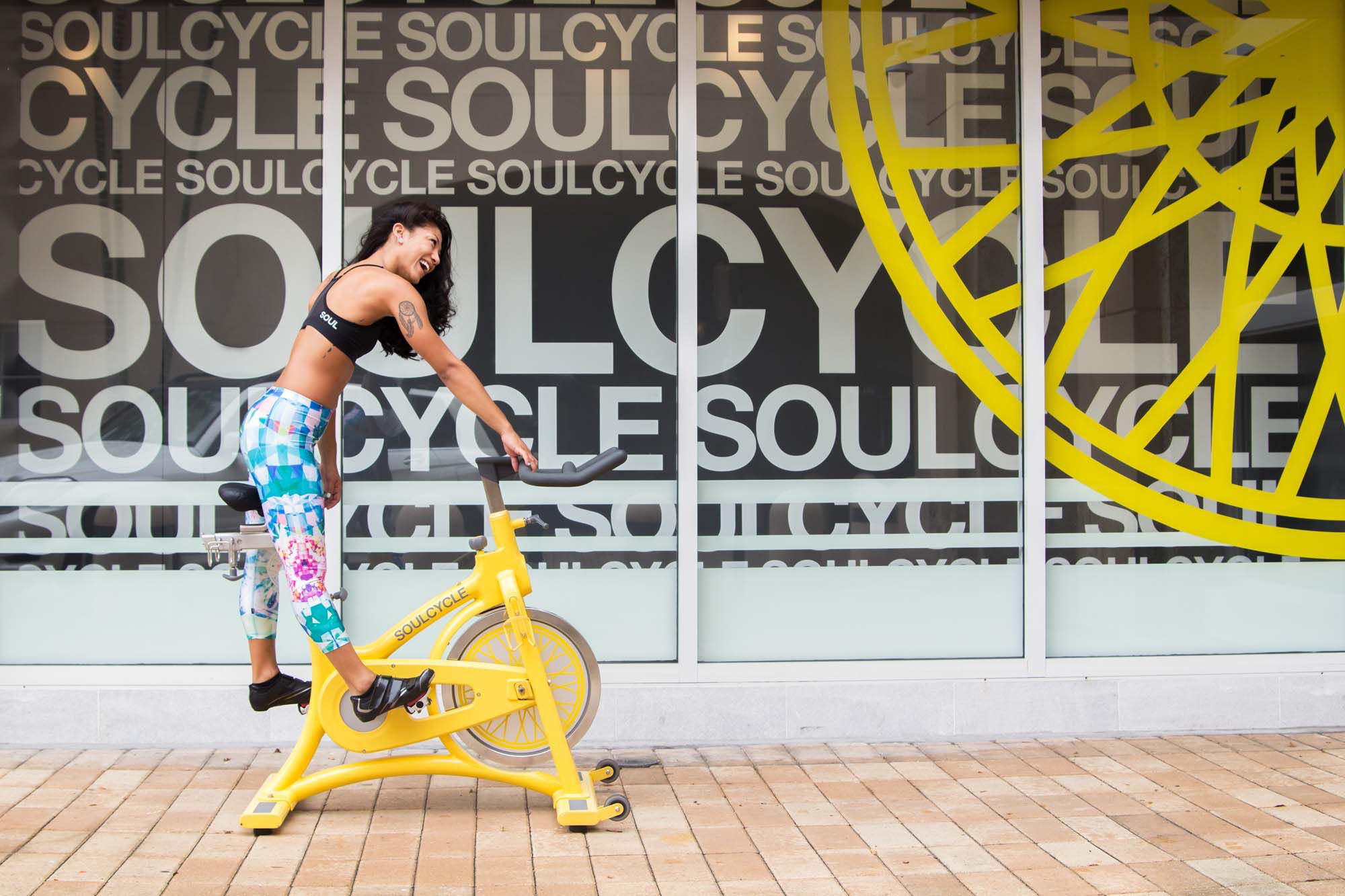
On the surface, the two studios offer the same thing: high-energy, cycling classes that take place in dark rooms with loud music. But when you compare their websites or walk into each physical studio, you instantly understand that the culture is different.
Swerve values teamwork, with the motto “we ride in TEAMS.” This influences the physical layout of the bikes, as riders are placed in color-coated bikes during the workout that represent their team. The sense of camaraderie is apparent even after the workout, with the presence of a common area centered around a smoothie bar, designed to encourage post-class socializing.
SoulCycle exudes a more spiritual, even “cultish” vibe. Backed by the motto “find your soul,” SoulCycle empathizes spiritual enlightenment — with its candlelit interior and inspirational mantras. The workout is led by an instructor who guides the riders through the spiritual journey and even ends with a yoga-inspired “namaste.”
5. Reflection — how a brand promotes or reflects the values of the ideal customer, not necessarily the target customer.
A brand’s reflection of an ideal consumer helps the audience understand its relationship to its product and services. The goal is to appeal to a broad audience, not necessarily the target customer. Let’s look at Health Warrior, the brand that sells energy bars.


Health Warrior’s plant-based protein packed bars definitely appeal to the high-intensity athlete. The more diet-conscious consumer may opt for their 100-calorie Chia bars. More generally, however, Health Warrior’s products appeal to the consumer who desires a healthy lifestyle. It wouldn’t make sense for the company to brand itself as a bar for athletes, even if the target customer is the high-intensity athlete, as this would isolate a good portion of their market.
The gender-neutral term “Health Warrior” is broad enough that it speaks to the Iron Man junky, the marathon-running enthusiast, the yoga and mindfulness guru, and even the person who made it her new year’s resolution to lose a few pounds. It’s mission, “to inspire healthy diet and exercise habits, fueling that momentum with our radically convenient superfoods” reinforces the values of each persona that fits this broad audience.
6. Self-image — how a customer sees him or herself related to the brand.
Consumers construct their identities and present themselves to others through the brands they choose. Pass someone on the street wearing a tailored suit, Christian Louboutin heals, and carrying a Stumptown Coffee — you immediately deduce the person is a high-powered business professional, who maybe works in the fashion industry, and appreciates high-quality coffee.
Brands can effectively target their audience by resonating with that audience’s real or desired selves. Patagonia, for example, targets the environmentally conscious and upscale consumer. Someone who frequently shops at Patagonia doesn’t just appreciate the quality of its products but likes the idea of buying from an environmentally friendly company.
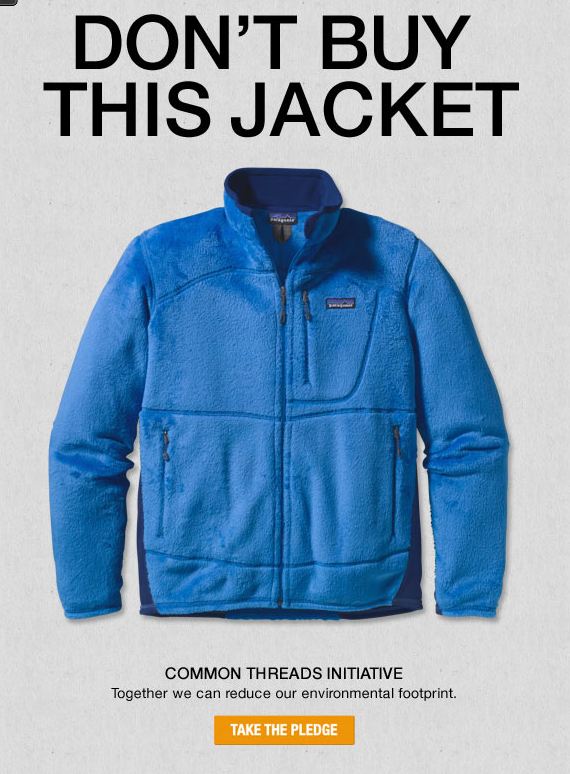
Patagonia’s education-driven marketing campaigns embody a thorough understanding of their target customer’s self-image. In 2011, Patagonia launched a bold, albeit risky, marketing campaign on sustainable consumption, telling consumers not to buy their products: one ad reads, “And this is a 60% recycled polyester jacket, knit and sewn to a high standard…But, as is true of all the things we can make and you can buy, this jacket comes with an environmental cost higher than its price.”
A related campaign included a 28-minute documentary film Worn Wear showing rugged fans wearing the Patagonia clothing until it comes apart at the seams, sewing the clothing back up again, and then recycling the parts that are beyond repair. These campaigns led to significant increase in sales for multiple reasons: 1) they gave credibility to Patagonia’s mission statement to “build the best products, cause no unnecessary harm, use business to inspire and implement solutions to the environmental crisis”; 2) the ads read in a genuine and informative manner, appealing to the socially conscious and discerning customer; and 3) they empowered customers who desire to be more socially and environmentally responsible.
* * *
You’ve been fed a lot of information, it’s time to digest.
By now you should 1.) recognize the importance of communicating clearly to your customers by speaking their language and not bombarding them with technical fluff; 2.) understand the need for the physical attributes of your brand to be consistent, recognizable and familiar in order to help build a loyal following; and 3.) recognize that a brand identity is multifaceted and requires a clear understanding of your company values as well as your company mission and vision.
Ok, back to the yogurt.
Not having a clearly-defined brand strategy is like treading water in a vast ocean. You may get by in the immediate term, but you’ll likely drown in the process of competing with the better swimmers. Everything from the direction of your business to its organizational structure to the productivity of your employees depends on the vitality of your brand identity. Moreover, the loyalty of your customers and the future of your business depends on it.
My advice to you: Do your research. Take the time now to craft a thoughtful branding strategy. Jot down your values. List them. Sort them. Narrow down the list to 4 or 5. Then hone them. Define your mission and vision statements. Run them by stakeholders. Get your team involved. Make sure they align with your values.
Once you’ve crafted a solid brand identity to communicate across all your marketing and advertising campaigns, you will feel much more confident about the current and future trajectory of your business. Your brand identity will define your competitive edge. It will empower your employees and delight your customers. Most importantly, a well-developed brand identity will stand and speak for itself. This means the next time customers shop in the “yogurt” aisle, you won’t have to do much to get them to pick your brand.
Like this article? Check out what else we have to say—from marketing to tech to everywhere in between—here.